

Four ways to improve employee financial wellbeing in 2026
Employee wellbeing has moved from a “nice to have” to a business-critical priority. With rising living costs, ongoing mental health challenges, and increasing pressure on productivity, 2026 will demand a more structured, data-driven approach to wellbeing — particularly financial and mental wellbeing.
The most successful employers are no longer relying on one-off initiatives. They are building joined-up wellbeing strategies that educate, engage and support employees in practical, measurable ways.
Here are four proven ways to improve employee wellbeing in 2026.

Host financial wellbeing webinars and seminars
Live webinars and seminars remain one of the most effective ways to engage employees with wellbeing education.
They provide a direct and interactive way for employees to access expert-led support in a safe environment, where they can ask questions, deepen their understanding and feel genuinely supported.
Financial wellbeing webinars can help employees improve their money management skills, understand pensions and long-term planning, manage debt and build confidence around day-to-day financial decisions.
Mental wellbeing sessions, meanwhile, focus on managing stress, improving resilience, preventing burnout and supporting better work-life balance. For employers, webinars are a cost-effective way to deliver consistent education at scale, whether teams are office-based, hybrid or fully remote.
Webinars and seminars allow employees to:
- Learn directly from experts
- Ask questions
- Feel supported in a safe environment
- Gain practical, actionable guidance
For employers, these sessions provide structured support at scale, while reinforcing a proactive wellbeing culture. Key financial wellbeing topics for 2026 include, Money mindset & budgeting, Foundations in personal financial planning, pensions, retirement planning, investing and financial wellbeing at different life stages
Why webinars work:
They are cost-effective, measurable, and accessible for hybrid and remote teams — while also delivering high perceived value to employees.
Offer a financial wellbeing portal or app
A financial wellbeing portal or app plays a vital role in extending support beyond live sessions.
Planned Future’s award-winning portal gives employees continuous, 24/7 access to trusted financial information, digital tools and wellbeing resources, allowing them to engage with support at a time that suits their personal circumstances.
Through a digital portal, employees can explore budgeting resources, financial planning tools, educational content and guidance services as and when they need them.
For employers, this creates a visible, tangible wellbeing benefit that staff can actively use. It also provides valuable insight into engagement levels, allowing wellbeing teams to measure uptake and identify where further support may be needed.
A strong portal typically includes:
- Educational resources and guides
- Budgeting and planning tools
- Financial calculators
- On-demand content
- Access to a Money Guide or signposting services
This gives employees the ability to self-serve support when it matters most, which is especially important during moments of financial stress.
Benefits for employers include consistent wellbeing provision across the workforce, tangible wellbeing investment employees can see and use, data and usage insights to measure engagement and reduced reliance on ad-hoc wellbeing support
Portals also work exceptionally well alongside webinars, giving employees somewhere to continue learning after live sessions end.
Offer eLearning – Let employees learn at their own pace
While live sessions are highly effective, not all employees can attend them due to shift patterns, workload or personal commitments.
This is why eLearning is such an important part of a modern wellbeing strategy. On-demand learning allows employees to access structured financial and mental wellbeing education at their own pace, revisit topics when needed and build their understanding gradually over time.
eLearning is particularly valuable for organisations with remote workers, shift-based teams or large workforces spread across multiple locations. From an employer’s perspective, it provides consistent delivery of wellbeing education, easy reporting on completion rates and long-term value from a single implementation. Most importantly, it ensures no employee is excluded from accessing support.
eLearning allows employees to:
- Learn in their own time
- Revisit content when needed
- Progress at a pace that suits their understanding
- Access consistent, quality education
- Claim CPD credits
Modules can cover both financial and mental wellbeing, and are particularly effective for new starters, shift workers, remote teams and employees returning from extended leave.
Implement a strategy – Combine webinars, eLearning, a portal and the Money Guide Service
The most successful wellbeing programmes in 2026 will not rely on one single tool or initiative. Instead, they will combine webinars, eLearning, digital portals and access to a Money Guide service into one joined-up strategy.
This connected approach ensures that employees receive support in different formats, at different stages of their journey and through different learning styles.
Live webinars create engagement and motivation, eLearning reinforces knowledge over time, and wellbeing portals provide daily access to trusted tools and information. A Money Guide service adds an extra layer of practical support, offering clear information, guidance and signposting without stepping into regulated financial advice.
Crucially, an effective wellbeing strategy also includes regular feedback and data collection. This enables employers to understand what is working, where engagement is strongest, and how wellbeing activity is influencing key business outcomes such as absence, retention and productivity.
This joined-up approach ensures:
- Employees receive consistent education across multiple formats
- Different learning preferences are supported
- Support is available at every stage of the employee journey
- Employers can measure engagement, outcomes and ROI
Plan smarter for 2026
Employee wellbeing in 2026 will be defined by long-term thinking, not one-off initiatives. Employers who invest now in education, digital tools and joined-up strategies will not only support their workforce more effectively, but will also build stronger, more resilient organisations for the future.
Employee wellbeing in 2026 will be shaped by:
- Ongoing cost-of-living pressures
- Rising mental health awareness
- Greater demand for employer-led support
- Stronger focus on measurable wellbeing outcomes
Employers who act now will be better positioned to support their people — and protect performance — in the year ahead.
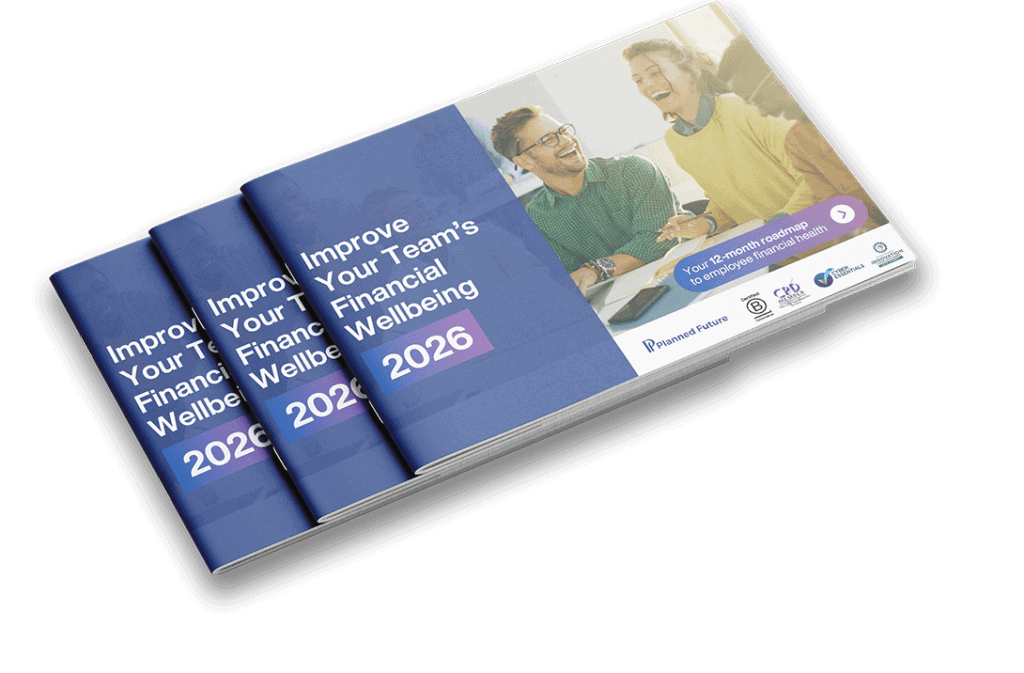
Download the FREE 2026 Employee Financial Wellbeing Guide
For a practical roadmap to building or refining your employee wellbeing strategy, our free 2026 Employee Financial Wellbeing Guide includes structured frameworks, delivery models and measurable approaches tailored for UK employers.
If you’d like a structured roadmap to build or refine your wellbeing strategy for 2026, our free guide provides:
- A 12-month wellbeing framework
- Delivery models for education and engagement
- Practical guidance for UK employers