Many people change jobs, move house, or lose track of old workplace pensions during their careers. As a result, there is a chance that a pension pot may have been misplaced along the way.
According to research from the Pensions Policy Institute (PPI), there are around 3.3 million lost pension pots in the UK worth a combined £31.1 billion. The average lost pension is worth approximately £9,500, although many are worth significantly more.
With the average person changing jobs around 11 times during their working life, pension savings can easily become scattered across different providers and forgotten over time.
These pension pots have not disappeared. They still belong to their owners and could make a meaningful difference to retirement income.
Why do pensions get lost?
The most common reasons include:
- Changing employers
- Moving house without updating providers
- Changing a name following marriage or divorce
- Pension providers merging or rebranding
- Small workplace pensions created through auto-enrolment
Many people are surprised to discover they have multiple pension pots from previous jobs that they have not reviewed for years.
How to find a lost pension
Check existing records
For a manual, more time-consuming approach, individuals can start by searching through old payslips, pension statements, employment contracts and emails from previous employers.
Even finding the name of a former employer and contacting them can help trace a pension scheme.
Use the Government Pension Tracing service
The UK’s free Pension Tracing Service can help individuals find contact details for workplace and personal pension providers.
The service can be accessed via the Pension Tracing Service website and is completely free to use.
However, it is important to understand what the service does – and does not – do.
The Pension Tracing Service provides contact information for pension schemes. Individuals must still contact each provider themselves, complete any required paperwork and follow up to establish whether they hold benefits with the scheme and what those benefits may be worth.
A simpler alternative – Pension Pie
For people with multiple previous employers, tracing pensions manually can become time-consuming. This is where Pension Pie can help.
Rather than simply providing provider contact details, Pension Pie carries out much of the tracing work on behalf of its customers. Their team contacts providers, follows up enquiries and produces a clear report showing any pensions they uncover. Benefits include:
- Handling paperwork and provider contact
- Investigating pensions that may have been forgotten
- Compiling findings into a simple, easy-to-understand report
- Offering a money-back guarantee if a full search identifies no pensions in the customer’s name (subject to terms and conditions)
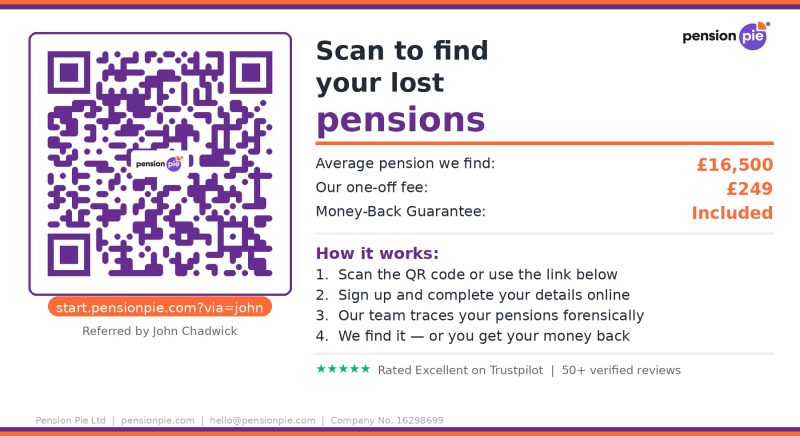
Pension Pie has helped almost 3,000 UK workers trace more than 7,700 pensions totalling £4.7m+. The average value of a pension they recover is £16,500, and their service has earned an Excellent rating on Trustpilot.
While every individual’s circumstances are different, these figures highlight the potential value of tracking down pensions that may have been forgotten.